



They’re certainly not new. There are a number of well-known authors who have enjoyed the success of being traditionally publishing while still taking on their own projects that they self-publish. Some of them come at this from having been self-published authors who caught the attention of traditional editors and publishers. Others worked in reverse, becoming well-known traditionally published authors but experimenting–often in other genres or under pen names–with projects that they themselves control.
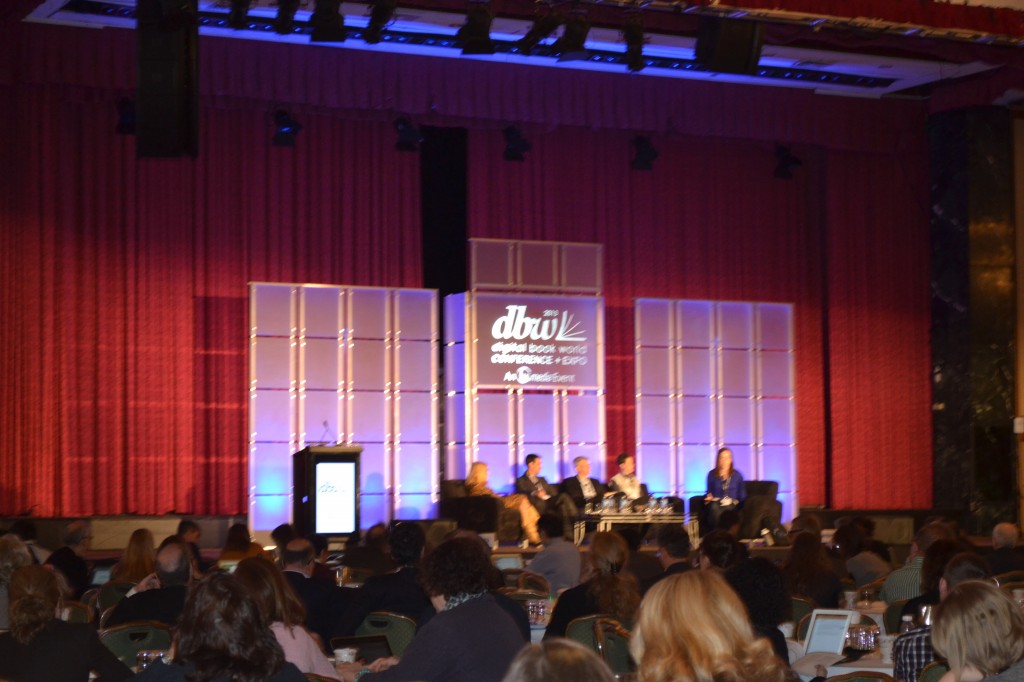
Now, this type of writing career has a name. Hybrid authors, as they are being called, were the featured topic of this morning’s sessions at Digital Book World. Phil Sexton presented some very detailed data on the sales and perceptions of the industry from the three types of authors discussed: self-published, traditionally published, and now, hybrid.
According to the data, it would appear almost as though the hybrid authors are the ones with the most satisfaction with the publishing industry and with their own careers. Perhaps the most interesting point Sexton shared was that hybrid authors were almost evenly split on whether they would publish their next manuscript traditionally or on their own.
Following Sexton’s presentation and a interview with author Hugh Howey and his agent Kristin Nelson about his decision to sign a print-only deal with Simon&Schuster after earning an average of $50,000 per month on his own, Laura Owen of GigaOm moderated a panel of agents to discuss this hybrid author status. The agents featured in the panel represent such hybrid authors as Amanda Hocking and Bella Andre.

Mercy Pilkington is a Senior Editor for Good e-Reader. She is also the CEO and founder of a hybrid publishing and consulting company.