


Freescale | Good E-Reader - ebook Reader and Digital Publishing News

Archive for freescale

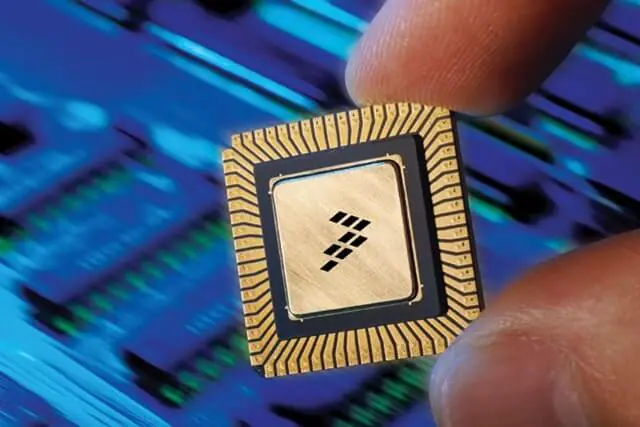
Freescale has been attending various technology conferences over the course of the last two months showing off their new i.MX 6 series of processors. The i.MX 6SoloLite is especially interesting because it was specifically designed for the next generation of e-readers.

The new i.MX 6SoloLite is an expansion on their seminal i.MX508 chip-set that powered millions of e-readers! Everything from the Kindle to the Nook are using these processors and Freescale is betting on delivering an even faster response time. This means faster page turns, higher resolution and increased performance.

The single-core i.MX 6SoloLite by Freescale integrates an ARM Cortex-A9 core running up to 1GHz with a 2D graphics processor, 256KB of L2 cache and 32-bit DDR3/LPDDR2 support. It will also feature display controllers for EPD and LCD-based panels.The i.MX 6SoloLite also introduces a new, simplified power management structure to be integrated across the i.MX 6 series for the reduction of design time and optimization of power efficiency, ultimately helping further extend eReader battery life.

One of the benefits of this new architecture is that it supports a myriad of operating systems. Many e-readers such as the Nook and Sony are using Android, while others use heavily customized versions of Linux. The new processor supports Android Version 4.0 (Ice Cream Sandwich), Linux, QNX, Ubuntu and Windows Compact 7.

So when can you expect to see new e-readers come out using the new i.MX 6SoloLite chip-set? Freescale told us an exclusive interview that mainstream adoption by high profile companies in April or May.

We are proud to announce today that out of a field of initially 80 different blogs, Freescale Semiconductor has shortlisted our own Good e-Reader as being one of the Top 20 Tech Blogs in the world! This is a huge step forward and a great honor that they—and by extension YOU—have recognized our website has being the definitive source of e-Reader, eBook, digital publishing, and tablet news! Although this is huge for us, the contest is not over yet! On February 9th, they are weeding out the competition and announcing the Top 5 2012 Smart Mobile Device Pundit! We would like to encourage everyone to vote for us by clicking on this link http://freescale.com/pundit, then clicking VOTE, and then on my name! There are no complex fields or any other information to write down, it’s a simple click to vote feature.

Comments (3)

Freescale the company whose processors are in 95% of all e-ink based e-readers has recognized Good e-Reader and put us on the ballet for their Tech Pundit of the Year! This is a great honor for us to be on this prestigious list alongside Wired, Verge, Gizmodo, and the New York Times!

We would like to implore all of our loyal readers of our news source to take a few minutes and nominate us for the top 5! It is super easy, all you have to do is visit http://freescale.com/pundit fill out the form on the bottom left hand side. Simply write your information and nominate Michael Kozlowski of Good e-Reader and write down our blog link!

I would like to thank Freescale for putting together this excellent contest and would like to encourage everyone to vote for Good e-Reader to help take our blog to the next level!

One company that we don’t hear much about in the consumer electronic market is Freescale. The reason for this is that they are traditionally back stage players. They make the chips which are fitted on e-book readers or other in-vehicle entertainment systems. We see the devices everywhere but are not much aware of the chip that actually makes it run. We rather hear or read about big names like Qualcomm, NVIDIA, Texas Instruments, and Samsung for the tablets and Smartphones that they have given to the market. Freescale is now going to come up with two low power processors based on the ARM Cortex-A9 core.

One of the chips that they are developing is a 1 GHz single core processor named the i.MX 6SoloLite. It will support devices which will have 2D graphics, as well as E Ink and LCD display panels. The chip has 256 KB of L2 Cache and compatible with 32 bit DDR3 memory chips. Next generation e-book readers, which are expected by the end of this year or early next year, will have this chip from Freescale at its heart.

The other advantage that the new chip from Freescale offers is that it draws less power, thereby enhancing product run time. However, that is not at the expense of performance; rather, it adds several new features which in turn enhances its overall performance. Further, the chip is cheaper than its predecessor.

The second chip that Freescale is launching is named the i.MX 6DualLite and, as the name might suggests, it comes with twin cores. Even though it runs at 1 GHz clock speed, it has 512 KB of L2 cache, and also supports 3D graphics.

This second chip is to be used on tablets, medical system equipment, home energy management solution devices, televisions, and other such devices.

Also, the new Freescale chips are expected to be ready by the second half of 2012.

via liliputing

Categories : e-reader, Tablet News
Comments (0)

freescale

Many companies this year have demonstrated concept prototypes that are able to play video on an e-ink display. A few months ago, Bookeen showed off a great looking video from their research and development labs. Freescale—who makes the internal processors for almost all of the current generation e-readers like Amazon, Sony and Kobo—showed off a new video that shows off 30 frames per second using e-ink Pearl.

Who really knows if this tech will make it into any e-readers in the near future, but it does allow for some interesting aspects that could appeal to some companies. For example, if you look at the Amazon e-readers and their special offers, the adverts are all static. If they were to use some of the tech found in this video, their advertisements could display small frame rate animations. This would allow them to be more dynamic and appeal to more potential partners. Other companies could benefit by taking a loss on the hardware and make up the cost by getting more advertising partners on board. With the tremendous discounted costs on the next generation of Kindles, other companies need to be able to offer their devices at lower rates in order to compete. Utilizing video technology in e-readers would add some separation from the competition and allow for some savvy options to take advantage of it.


We have already seen a lot of ‘pad’ suffixed devices before ever since the original iPad was launched and the latest to join the list is HaiPad from the Chinese electronics company Haier. The name apart, the HaiPad is even farther apart from the Apple tablet as chalk is from cheese. This since the HaiPad is an entirely different segment with a 7 inch display. In fact, the HaiPad will be more like a cross between a smartphone and a tablet and comes with the ability to make phone calls on its own.

The HaiPad runs Android 2.2 with a custom UI built on top of it by DianXin OS which makes available four apps along the bottom of the home screen for quick launch. However, the choice of operating system is disappointing considering Huawei has ensured its 7 incher MediaPad runs the latest Android 3.2 Honeycomb.

These apart, the HaiPad has a 800MHz Freescale iMX515 A8 CPU at its core along with built-in 3G functionality as well as cameras along the front and rear of the tablet. The tablet will be available in a variety of color options and what better way to bring this fact out than to have beautiful ladies dressed in the color of the HaiPad posing for media attention. The tablet will however won’t have access to the official Android Market with buyers having to do with Haier’s own app store which is currently offering close to 15,000 apps.

The HaiPad is expected to start shipping from August with prices starting from 3,299RMB, which converts to about $500.

via engadget, via electronista

Categories : Tablet News
Comments (0)

During the last day of Computex we managed to get some time at the Freescale booth where they were showing off their next generation iMx 53 processor and the worldwide introduction of the next generation IMX 6 series.

A little bit of history for those who are unfamiliar with Freescale and what they do; if you look at popular e-readers such as the Amazon Kindle 3, Sony PRS-650, and Kobo all use the processor. It allows the processor to actually have epaper support built right into the chip. This provides faster and more robust page turns along with added refresh benefits.

The IMX 53 processor is step up from previous iterations mainly found in tablet computers. The main benefit of this new processor is that it will allow tablets to use DDR3 RAM and allow processors to go over the 800 MHZ threshold. This new chip is out now and will be implemented mainly into tablets because the epaper support is not built into this specific chip.

The new IMX 6 series is the next generation Freescale processor and it really takes things to the next level. It supports up to Quadcore processors and up to 4.3 GHZ processing power! We have included in our video the worldwide premier of the new IMX 6 series demo.


The Taiwan based Netronix might be a major player in the field of e-ink based e-readers but the company is showing all signs to tap into other seemingly greener pastures. And none other seems to be as juicy as perhaps the booming tablet segment right now. The recent unveiling of an Android tablet at the CeBIT event in Germany is ample proof of that.

The yet unnamed tablet comes with a 9.7 inch (the same size as that of the first gen iPad) capacitive multi touch display though the screen does look a lot glossy. The tablet runs Android 2.2 Froyo and is based on a Freescale i.mx51 processor. Netronix is however not revealing everything about the tablet just yet though what is known is that the tablet will include microUSB and USB ports, a headphone jack. Also being Froyo based, the usual Android buttons are evident on the bezel. The tablet though presents a nice proposition price wise, as its just $250 that the tablet will cost once it enters market.

via armdevices

Categories : Tablet News
Comments (0)

freescale

Good E-Reader is live at CES and it is tablet mania here. Who better to lead the content distribution for new devices than Kobo? The company is poised to increase its scope by securing deals with Blackberry and  Freescale’s new Smart Application Blueprint for Rapid Engineering (SABRE) for Tablets based on i.MX53 running Android.  By including the Kobo eReading App, OEMs have a simple path to meeting customer expectations for a compelling tablet reading experience.

Many OEMs turn to Freescale to quickly assist them in manufacturing  cost-efficient tablets that feature powerful performance and processing capabilities. By including the Kobo eReading App, OEMs now have a simple path towards meeting customer expectations for a compelling tablet reading experience. The Kobo eReading app will be demonstrated on the i.MX53 prototype in Freescale’s meeting space at the 2011 Consumer Electronics Show.

The new technology to be deminstrated today utilizes Freescale’s new reference design which uses the i.MX53 platform. This enriches the next generation of tablets through 1.2GHz of processing power, 1080P video output and 27 million triangles per second of graphics acceleration all driving a 10.1” 1366×760 LVDS Display with Capacitive Touch. Freescale’s new reference design is targeting availability Q1 2011.

“As the market-leading semiconductor vendor for eReaders and other smart mobile devices, Freescale is closely attuned to the needs of our OEM partners, who must bring to market not only a compelling device but also the right applications, backed by content that suits the tastes and preferences of their customers,” said Ken Obuszewski product marketing director for Freescale’s Multimedia Applications Division “Integrating Kobo’s exceptional eReading experience will help our OEM customers more easily compete and succeed in today’s competitive market.”

Comments (2)

tablet pc sales

Many popular touch screen manufacturers and companies making chipsets are entering an golden age of sales and profit directly arbitrated to the proliferation of tablet and slate computers.

With the tremendous success of the Apple iPad, many companies such as Toshiba, Hewlett-Packard, HTC and Cisco Systems Inc are all working on a new generation of Tablets. Many companies already have begun to usher their products to market, such as the Samsung Galaxy Pad.

Many other mainstay tech brands such as Research in Motion, Lenovo, Motorola, and others are also developing tablet computers, while new companies such as Notion Ink are developing quite a following of people looking for an alternative to the Apple iPad.

Tablet Computers are beginning to rise from a fringe gadget. They have been available for many years now, but just recently became a mainstream device, taking three quarters of the market place away from Laptop and Netbook computers. “The tablet market is going to be one of the largest for touch screen controllers,” said Jennifer Colegrove, director at Display Search, which monitors trends in the display sector. Colegrove expects the tablet PC market to generate $90 million in revenue for touchscreen chipmakers this year, and that could double in 2011.

And those numbers are expected to keep growing to as high as $500 million by 2012, forecasts Rodman & Renshaw analyst Ashok Kumar, dwarfing unit-for-unit the handset touchscreen market.

Companies such as Qualcomm are building new mega factories just to produce touch screens and others such as FreeScale, Liquidvista, Texas Instruments, Chinese Pixcir Microelectronics and Taiwan-based Elan Microelectronics Corp are all entering the touch screen frenzy hoping to land lucrative contracts from larger companies. All of these companies make chips that go beyond a simple touch screen device. They allow a user to zoom, pinch in and out, and make complex gestures to interact with the screen.

Typically, the dollar content for a touch chip on a tablet device is 3-5 times the average selling price of a mobile phone touch chip. Which is why the phone sector for iPhones, Android Phones and others remain popular, but tablets are more lucrative.

It seems like the Tablet PC is really exploding right now, and it is still at its infancy stage. As new screens are developed, such as the Pixel QI tablet set to debut soon, people will experience a taste of a screen that is different than just a TFT or LCD one.

People were very skeptical in the beginning to see if this resurgence of tablet computers would go anywhere. They have been around for a long time. What began as a niche market 15 years ago (when Silicon Valley-based Synaptics put a credit card-sized touchpad on the Apple Mac Book) has exploded into a global touchpad market forecast to be worth $9 billion within a couple of years across PCs, handsets and other gadgets such as e-readers.

Many people discounted that tablet computers would have the retail life of a Netbook. Remember those? They were all of the rage last year, and now hardly anyone buys these. Although 2010 is the year in which the mass market’s attention was firmly eagle eyed on the iPad, and now suddenly all of the major OEM vendors want to get a piece of the action.

I think the success of tablets will be up to two deciding factors; One – the independent developing community that is the lifeline on the success of a new device and 2) Companies who develop their own content delivery network that allow the tablet to be used specifically for a niche population of users.

Independent developers make all of the popular applications, games, and other tools you enjoy. The big proponent of Apple’s success in the market climate is directly arbitrated to the developer community that was established with the first generation of iPhone. Not only does Apple enjoy supremacy in the sheer amount of content available via its distribution network of not only games, and apps, but of Movies, TV Shows produced by large networks, but Google Android is proving popular as well. Google Android is basically a free operating system to be used by Tablet PC companies, as long as they license it. Companies that do not bother to license from Google end up getting bocoytted by the Android Market, such is the case of Augen with their Gentouch78. Google Android and the Android market are a great alternative for smaller companies and larger companies alike to have an open-source, stable, and robust platform in order to develop custom Skins, and applications. Since new applications on both platforms see daily updates, revisions, and new things launching, it gives users secure knowledge that their device will still be relevant in a few years, and give them daily things to do to interact with their device differently from Portable Computers and Netbooks.

Companies such as Cisco and Research in Motion are developing their tablets not for the mass market (although they would not mind the sales) but as tablets aimed at a specific target group. In Research in Motion they are catering to the business and corporate market, which has sustained their smart phone business for the last 10 years. Cisco is developing tablets to be used by Inventory Control, Manufacturing, Factories, and even air plane navigation to carry flight information.

For a new tablet computer to hit the market and be sustainable, it requires a long term investment by the end user. The product has to be relevant beyond 2010. A company has to have one of those two things and both of those things has to be a “must have item” in order to succeed and for tablets to be further refined over time to mature. Screens are one of the major aspects of this. New screens, with a lower cost, and support of multi-touch, complex gestures, augmented realitym and other facets will really determine the success of tablets and the growth of the market.

Source: Reuters
Ranting: Good E-Reader

color e-ink

At the recent Society for Information Display or SID in Seattle last week there were a number of E-Ink prototypes available on the main exhibit hall. There were some great new E-INK screens that provided better quality E-Ink with better contrast and display. E-Ink is getting better and better with each technological iteration.

While other companies are bypassing E-Ink all together in favour of Color and Video with reflective displays such as Qualcomm’s Mirsol. Also, Texas Instruments is pioneering new E-Ink display that will save battery life and have faster page turns.

There are also new developments in Color E-Ink that allow the playback of Flash Technology with crisper and stronger colors. Although these new E-Ink screens do not do FULL color, and are unable to play full video. They present enough to be a departure from standard E-Ink screens found in the Kindle, or Kobo E-Reader. The Screens are able to synthesize color by applying a filter on top of a regular black and white E Ink panel, which itself has blacker blacks and whiter whites than before. Earlier versions or prototypes trying to do color with E-Ink appeared washed out because too much light was lost on its journey into and out of the capsules and through the filter. But the next generation of color displays have a better color gamut. They’re built with a higher-resolution black and white screen that contains new materials.

We can look forward to by the end of the year many new innovations in Color and Touch screen E-Reader technologies by companies such as Freescale, Qualcomm, Touchco and Texas Instruments who seem to be pioneering a new breed of E-Ink screens that are thinner, and provide more resolution.

Comments (6)

shogo tablet pc

The latest Good E-Reader news has a breaking story out of France today, with a company named Realease working in conjunction with Freescale to release two different Slate PC’s that will be aesthetically customizable by the company to meet your demand.

The first Slate from Realease will be available this August! It features a 10-inch version is based on Free scale’s i.MX37 (ARM 11) processor; while the second model features Freescale’s i.MX51 (ARM Cortex A8) processor. The developers claim that you can also run Google Android on it as well, although it will only be shipped with Linux. Both devices will be compliant with HTML 5 and Adobe Flash technologies.

There is a ton of great hardware features on the device such as three USB 2.0. You’ll also find Ethernet connector, a microphone port, as well as a port for headphones. There is a front facing web cam, an accelerometer and motion sensor that will turn the device on when it detects movement.

This device is mainly geared towards developers, and will not see a wide consumer release. The developers hype this is a niche device, aimed at small companies to be able to make custom applications for a myriad of uses. The company claims they will change the designing, and color to suit their customers.

Categories : e-Reader News
Comments (0)

The Tablet PC segment continues to be abuzz with exciting developments. In fact, things seem to have heated up all the more as we approach the Computex fair that is scheduled to be held just next week. So its Amtek’s turn now to announce Tablet PCs that they plan to unveil in next month’s Computex show. And they are not bringing in Tablets in ones and twos but all of 5 at one go. Yes we did count them all right so the truth is, AMtek has readied 5 of them to do, what can said as, take ‘em by the scruff of the collar and shake ‘em up, sort of thing with the Tablet segment. When was the last time did you hear of anyone coming up with that many Slates at one go?

Anyway from what is known till now, the Tablet features an exciting array of technologies and has an impressive spec sheet to show off. Like as per what Amtek has revealed, the slates will be powered by processors that range from a rather simple 800MHz Freescale chip to all the way up to Intel’s Menlow and Montevina processors while also including the NVIDIA’s Tegra 2 chip somewhere in between. The choice of operating system too is wide and all encompassing so that there’s WinCE 6.0/7.0 and Windows 7 to the open source Android 2.0 or Linux. Touchscreen technology too varies and is inclusive of active digitizers as well as capacitive screens capable of accepting multitouch responses.

Now coming to the actual tablets, the AMtek iTablet Speed-Lite (AE03) is at the bottom rung of the ladder and will pack in a 10.1-inch 1024 x 600 resolution multitouch screen display though one can also opt for a 1024 x 768 display. Powering the slate will be a NVIDIA Tegra 2 processor clocking in at 1GHz and is coupled to a gig of DDR2 SDRAM and half a gig of NAND. Choice of operating system varies from WinCE 6.0/7.0 to the Android 2.0 and Linux. There will be a 2MB camera built in and features three USB 2.0, audio in/out along with two phone jacks. Connectivity options include 802.11 b/g/n WiFi, Bluetooth with optional 3G and GPS. A 10800mAh batterypack provides power to the tablet.

The next in line is the Amtek iTablet Ex-Lite II (AE04) tablet that’s built around a Freescale chip with a clock speed of 800MHz. Then there is 512MB of DDR2 SDRAM and 512MB NAND. Choice of OS include WinCE 6.0/7.0, Android 2.0 or Linux. Rest of the specs is the same as in the AE03 so that there’s the same 10.1 inch multi touchscreen along with the same port line up.

Next we move on to Intel territory which includes the iTablet Lite, the T23A Tablet PC and the T23X Tablet PC. Of these, the iTablet Lite (TZ10) is a Windows 7 tablet and has the Intel Atom Z530 1.6GHz processor at its core. It features a 2GB DDR2 memory while storage comes in the form of a 64GB memory. Providing juice to the tablet will be a 4200mAh battery while rest of the specs remaining just the same. So there will be the same sized screen, the same connectivity option as well as ports.

The next two models – the T23A CULV and T23X CULV tablet PCs – are the bell and whistles model and has all the glitz that Amket could pack in. Like both the tablets feature the top of the line Intel Core 2 Duo 743 1.3GHz processors along with 4GB DDR2 667/800 RAM. Screen real estate increases too at 12.1-inches and includes pen digitizers. Resolution goes up to 1024 x 768 pixels while Cantiga GS graphics renders fast life like graphical resolution. Rest of the specs include a 1.3MP camera, audio in/out, two USB 2.0 ports, a RJ45 port along with a detachable cradle connector. Powering the two tablets will be a 3800mAh battery. Hard disk options include 160GB, 250GB and 320GB. However, of the 2 tablets, the T23A CULV comes with a pen input while for the T23X CULV iTablets, there is an optional digitizer pen input and touch input.

While that’s a lot of info packed in, there will be more spilling out during the Computex show, all of which will be covered here. So keep watching for more tablet pc or e-reader news.

Also be in touch of our Good E-Reader Magazine to keep in tune to the rapidly evolving Tablet/Slate or the E-Reader segments

Categories : Tablet News
Comments (1)